

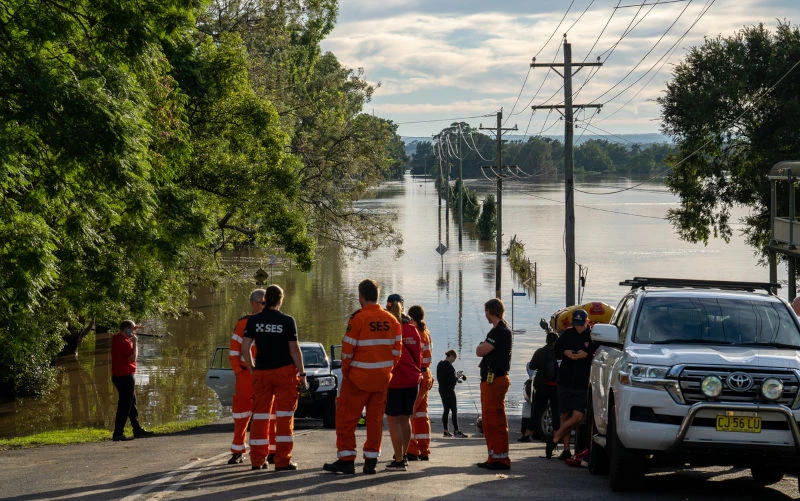
When disasters strike, local governments play a critical role in supporting affected communities. As the level of government closest to residents, they possess a deep understanding of local people, places, risks, and recovery needs. This local knowledge positions them as essential actors in all stages of disaster management, from prevention and preparedness through to response and long-term recovery.
Evidence from disaster recovery consistently demonstrates that outcomes are improved when decision-making is as localised as possible. State and federal governments therefore have an opportunity to invest in a long-term program that strengthens local government authority, mandate, and capacity across all aspects of disaster management, particularly preparedness, mitigation, and recovery.
Disaster prevention, preparedness, response, and recovery (PPRR) is an increasingly important policy priority in the context of escalating climate-related disaster risks and continued population growth. Disasters can have significant immediate and long-term impacts on communities, managing these impacts requires balancing urgent short-term needs with longer-term recovery, resilience, and adaptation objectives.
Strengthening local government capability and embedding local leadership within disaster governance frameworks would improve coordination, support more effective recovery planning and help communities build resilience to future disasters.
EmergencyRedi Week Toolkit
EmergencyRedi Week is an annual initiative designed to raise awareness about the importance of emergency preparedness, aiming to motivate individuals to plan and understand the actions needed to stay safe and prepared in emergencies.
The campaign encourages community-led action to strengthen local preparedness. It also calls on councils to share effective, measurable, and inclusive communications and tools that empower communities to prepare for emergencies, focusing on building coordinated and resilient communities.
Across Greater Sydney, councils actively participate in EmergencyRedi Week by sharing practical tools and resources to support local preparedness initiatives. Councils play a vital role in emergency response and coordination across the region, maintaining communication plans to ensure a unified response during major service disruptions. Many councils use inclusive communication channels to provide timely warnings and updates, helping residents access trusted and reliable information when it matters most.
Resilient Sydney encourages councils to:
- Ensure local emergency plans are developed in collaboration with people with disability and others most at risk during sudden events.
- Embed the needs and lived experiences of people with disability into all stages of emergency planning.
- Promote the development of household emergency plans tailored to individual needs and actively support communities to create their own.
- Collaborate to deliver emergency preparedness campaigns using consistent, inclusive, and evidence-based resources.
How universities can become allies in community-based responses to climate disasters
Communities across Australia are facing growing pressure from climate-related disasters and pandemics. Extreme heat, severe storms, and disease outbreaks are no longer future threats – they are affecting households and communities today. Australia’s latest National Climate Risk Assessment highlights the urgent need for new ways of working together to strengthen disaster resilience.
In this context, there is increasing recognition that public institutions, including universities, have an important role to play in helping communities prepare for and respond to future disasters. Universities have significant social responsibilities as educators, employers, research centres, and custodians of major physical and social infrastructure.
The growing emphasis on community-led disaster planning creates an opportunity to better integrate university resources, expertise and services into local resilience and adaptation efforts. However, the role of universities in climate adaptation and disaster resilience is still emerging. There is a need for practical frameworks that enable universities to become trusted and effective partners in local resilience-building, informed by community knowledge, supported by tools such as The Adaptation Game (TAG), and aligned with existing policy and governance systems.
This project explores how the University of Sydney can work with surrounding communities to prepare for and respond to climate-related disasters, including extreme weather events and infectious disease outbreaks. These risks exist within a broader “polycrisis” shaped by housing affordability pressures, economic inequality, health disparities and increasing social fragmentation.
As part of a 12-month research initiative, Resilient Sydney has contributed to a series of Uni-Disaster Workshops that examine the role of universities in disaster preparedness, response, and resilience-building.
The project positions universities as both physical and social infrastructure during times of crisis, with the aims of:
- Developing practical and scalable guidance for universities and communities
- Strengthening alignment with existing policy and emergency management systems
- Supporting meaningful, place-based community engagement, particularly with culturally and linguistically diverse (CALD) communities
Testing and refining The Adaptation Game (TAG), an interactive tool that supports community-led preparedness and helps generate locally relevant adaptation, communication, and policy responses.